
Secure Your Cloud-Based Applications in 2026: The Essential Guide to SaaS Penetration Testing
- 05 Oct, 2026
Secure Your Cloud-Based Applications in 2026: The Essential Guide to SaaS Penetration Testing
As Software-as-a-Service (SaaS) adoption reaches unprecedented levels in 2026, securing cloud-native applications has become a non-negotiable imperative for modern enterprises. Cyber threats targeting cloud environments and SaaS ecosystems are increasingly sophisticated, leveraging automated exploit toolkits, AI-driven reconnaissance, and complex supply chain vectors.
Implementing regular SaaS Penetration Testing (SaaS Pentesting) is critical to safeguarding sensitive customer data, maintaining strict multi-jurisdictional compliance, and preventing business-disrupting security breaches.
What is SaaS Penetration Testing?
SaaS Penetration Testing is a structured, simulated cyberattack designed to evaluate the security posture of a cloud-delivered software application. Unlike legacy on-premise penetration testing, SaaS pentesting focuses specifically on cloud-native risks, including multi-tenant data isolation, complex API fabrics, cloud identity management, third-party microservice dependencies, and elastic infrastructure configurations.
Key Pillars of SaaS Pentesting
1. Authentication & Authorization Security
Verification of robust access management systems, including Multi-Factor Authentication (MFA), Single Sign-On (SSO) protocols (SAML, OIDC), and OAuth flow integrity. Testing verifies that Role-Based Access Control (RBAC) and Attribute-Based Access Control (ABAC) strictly enforce least privilege.
2. Data Isolation & Encryption
Evaluation of data segregation in multi-tenant architecture to prevent cross-tenant data leaks. Verification of strong encryption mechanisms for data in transit (TLS 1.3) and data at rest (database-level encryption, KMS policy validation).
3. API & Microservices Security
Exposing vulnerabilities across REST, GraphQL, and gRPC endpoints. Assessment covers Broken Object Level Authorization (BOLA/IDOR), rate-limiting mechanisms, insecure data exposure, and payload validation.
4. Cloud Infrastructure & Misconfigurations
Scanning and manual verification of cloud container controls, IAM policies, public storage buckets (S3/GCS), open ports, and infrastructure-as-code (IaC) security gaps across AWS, Azure, or GCP environments.
5. Session Handling & Token Lifecycle
Testing session token generation, entropy, expiration, revocation, and protection against session hijacking, token replay attacks, and cross-site request forgery (CSRF).
6. Vulnerability Exploitation & Logic Flaws
Combining automated scanning with deep manual testing to discover complex business logic flaws alongside standard flaws like SQL Injection (SQLi), Server-Side Request Forgery (SSRF), Cross-Site Scripting (XSS), and Remote Code Execution (RCE).
7. Third-Party & Supply Chain Security
Auditing integrations with external APIs, marketplace plugins, and webhooks to detect vulnerabilities inherited from third-party dependencies.
8. Regulatory Compliance Alignment
Auditing controls against stringent security and privacy regulations, including GDPR, HIPAA, ISO/IEC 27001, SOC 2 Type II, and PCI DSS 4.0.
Strategic Benefits of SaaS Pentesting
Proactive Threat Mitigation: Identifies exploit vectors before threat actors can target them, preventing catastrophic data exposure and emergency remediation costs.
Streamlined Regulatory Compliance: Satisfies mandatory audit requirements across global privacy and cyber compliance frameworks.
Customer & Enterprise Trust: Demonstrates verifiable security commitment to enterprise buyers, reducing deal friction during vendor risk assessments.
Business Continuity: Prevents cyberattack-induced downtime, safeguarding platform uptime and operational revenue streams.
Hardened Development Lifecycle: Provides actionable insights for development teams, fostering continuous DevSecOps practices.
A Comprehensive Approach to SaaS Security with WATI
Relying on fragmented security tooling creates visibility gaps. WATI provides an end-to-end security framework that bridges automated vulnerability management with expert-led penetration testing and cloud auditing.
Why Choose a Holistic Security Solution?
Hybrid Testing Methodology: Blending automated vulnerability scans with manual business logic exploitation.
Advanced Adversary Simulation: Real-world red teaming scenarios targeting SaaS applications, APIs, and cloud infrastructure.
Cloud Platform Audits: Dedicated security reviews across AWS, Microsoft Azure, and Google Cloud Platform (GCP).
Dark Web Threat Monitoring: Proactive tracking of exposed credentials, API keys, and corporate assets across compromised databases.
Continuous Compliance Mapping: Real-time alignment with SOC 2, ISO 27001, GDPR, and PCI DSS requirements.
Frequently Asked Questions (FAQs)
1. What is SaaS penetration testing, and why is it crucial in 2026?
SaaS penetration testing is a controlled, authorization-backed simulation of real-world cyberattacks on a cloud application. In 2026, SaaS platforms are prime targets for automated exploit bots, supply chain compromises, and API attacks. Pentesting is crucial to protect multi-tenant environments, safeguard sensitive data, and pass enterprise procurement security reviews.
2. How does SaaS pen testing differ from traditional web application testing?
| Security Aspect | Traditional Web App Testing | SaaS Penetration Testing |
| Architecture | Single-tenant, hosted on-premise or dedicated servers. | Multi-tenant, cloud-native (AWS, Azure, GCP), serverless. |
| Attack Surface | Web frontend, application server, local database. | Microservices, API gateways, IAM policies, storage buckets. |
| Focus Areas | Standard OWASP Top 10 (SQLi, XSS, CSRF). | Multi-tenant isolation, BOLA, OAuth flows, shadow APIs. |
| Responsibility | Enterprise owns all hardware and software layers. | Shared Responsibility Model (Provider vs. Cloud Vendor). |
3. What vulnerabilities are most common in SaaS applications?
The most prevalent SaaS vulnerabilities include:
Broken Object Level Authorization (BOLA / IDOR): Allowing users to view or modify another tenant's data by altering IDs in API requests.
Cloud Infrastructure Misconfigurations: Overly permissive IAM roles and publicly accessible storage repositories.
SSO & OAuth Vulnerabilities: Flaws in authentication tokens leading to account takeover.
Shadow APIs: Unmonitored or undocumented endpoints lacking proper access controls.
4. Is SaaS penetration testing required for compliance standards like SOC 2 or ISO 27001?
Yes. While standards like SOC 2 Type II and ISO/IEC 27001 do not always explicitly dictate exact testing methods, auditors universally require evidence of regular, independent security assessments and vulnerability management. Penetration testing provides authoritative proof that controls are operating effectively.
5. How often should SaaS companies conduct penetration testing?
SaaS organizations should conduct pentesting at least once per year. Additionally, point-in-time penetration tests should be triggered after major architecture shifts, major feature releases, infrastructure migrations, or prior to enterprise compliance audits. Many mature organizations adopt continuous pentesting (Pentesting-as-a-Service) to cover fast-moving deployment pipelines.
6. What role do APIs play in SaaS penetration testing?
APIs represent the core communications fabric of SaaS platforms, connecting frontends, backends, mobile clients, and third-party services. Consequently, API testing is often 60%–70% of a SaaS pentest. Testing focuses on the OWASP API Security Top 10, evaluating authentication, authorization, rate limiting, data exposure, and input validation.
7. Can automated scanners alone secure a SaaS environment?
No. Automated tools excel at finding known software vulnerabilities (CVEs) and basic misconfigurations, but they cannot evaluate complex business logic, multi-tenant boundaries, access control flaws, or chained attack vectors. Effective SaaS security requires human expertise to simulate real threat actor behavior.
8. What should be included in a SaaS penetration testing report?
A comprehensive report must include:
Executive Summary: A high-level overview of strategic risks tailored for leadership and board members.
Technical Risk Assessment: Detailed breakdown of vulnerabilities scored via CVSS (Common Vulnerability Scoring System).
Proof of Concept (PoC): Step-by-step technical reproduction steps and impact evidence.
Remediation Guidance: Clear, developer-centric instructions for patching issues.
Attestation Letter: A formal summary document suitable for sharing with enterprise customers and compliance auditors.
9. How do SaaS companies select the right penetration testing provider?
Select a vendor based on:
Cloud & SaaS Expertise: Demonstrated experience with multi-tenant architectures and API frameworks.
Certified Professionals: Engineers holding recognized certifications (OSCP, OSEP, GWAPT, CISSP).
Clear Scope & Methodology: Alignment with rules of engagement, especially regarding cloud provider guidelines (AWS, Azure, GCP).
Actionable Reporting: Reports that go beyond automated scanner dumps to offer actionable remediation strategies.
10. What are the business benefits of SaaS pen testing beyond security?
Beyond hardening systems, SaaS pentesting serves as a sales enabler. Providing an independent penetration testing report or Attestation Letter significantly reduces deal cycles with enterprise procurement teams, lowers cyber insurance premiums, builds brand reputation, and increases long-term customer retention.
Share this Blog
More Blogs
Why Every Business Needs a WhatsApp Campaign Manager
Why Every Business Needs a WhatsApp Campaign ManagerIn today’s fast-paced digital marketplace, winni...
- 05 Oct, 2026

5 Powerful Ways to Automate Your Marketing with OvoWpp
5 Powerful Ways to Automate Your Marketing with OvoWppTraditional digital channels are facing unprec...
- 05 Oct, 2026

How WhatsApp CRM Tools Can Skyrocket Your Customer Engagement
How WhatsApp CRM Tools Can Skyrocket Your Customer EngagementIn an era where cold emails sit unopene...
- 05 Oct, 2026
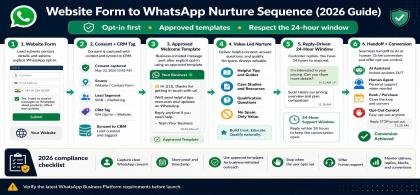
Website Form to WhatsApp Nurture Sequence (2026 Guide)
Website Form to WhatsApp Nurture Sequence (2026 Guide)Email opt-ins are suffering from declining ope...
- 04 Oct, 2026
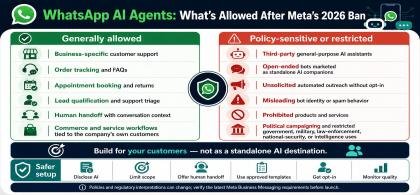
WhatsApp AI Agents: What’s Allowed After Meta’s 2026 Ban
WhatsApp AI Agents: What’s Allowed After Meta’s 2026 BanMeta's updated WhatsApp Business Solution Te...
- 04 Oct, 2026
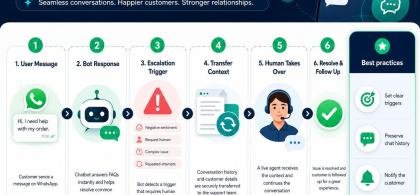
WhatsApp Chatbot to Human Handoff: Setup Guide (2026)
WhatsApp Chatbot to Human Handoff: Setup Guide (2026)A chatbot that gets stuck in an infinite loop o...
- 04 Oct, 2026
5 Smart Ways to Automate WhatsApp Marketing Without Sounding Spammy
5 Smart Ways to Automate WhatsApp Marketing Without Sounding Spammy Stop alienating your aud...
- 08 Aug, 2026
Launch a WhatsApp SaaS Business with a Platform Built for Growth
Launch a WhatsApp SaaS Business with a Platform Built for Growth Discover...
- 08 Aug, 2026
WhatsApp for E-commerce: How to Recover Abandoned Carts and Increase Sales
WhatsApp for E-commerce: How to Recover Abandoned Carts and Increase Sales...
- 08 Aug, 2026
Unified WhatsApp Inbox: The Feature That Fixes Team Chaos
Unified WhatsApp Inbox: The Feature That Fixes Team Chaos Stop losing context...
- 08 Aug, 2026
Why Digital Agencies Need WhatsApp Automation to Scale Client Results
Why Digital Agencies Need WhatsApp Automation to Scale Client Results Stop le...
- 08 Aug, 2026
Stop Losing Leads in WhatsApp Chats: The Complete WhatsApp CRM Solution for Sales Teams
The Ultimate Guide to Scaling WhatsApp Sales: Why Your Business Needs a System, Not Just a Phone...
- 08 Aug, 2026

Top Benefits of Using OvoWpp for Agencies and Startups
Top Benefits of Using OvoWpp for Agencies and StartupsIn today’s hyper-competitive market, agencies...
- 01 Jun, 2025

From Contact to Customer, The WhatsApp Sales Funnel Explained
From Contact to Customer, The WhatsApp Sales Funnel ExplainedWhatsApp is no longer just a messagin...
- 01 Jun, 2025

Boost Conversions with WhatsApp Short Links and Smart Widgets
Boost Conversions with WhatsApp Short Links and Smart WidgetsIn the competitive world of digital ma...
- 08 Feb, 2025

WhatsApp Business API vs WhatsApp Business App: Which Does Your Marketing Team Need?
WhatsApp Business API vs WhatsApp Business App: Which Does Your Marketing Team Need?Marketing teams...
- 08 Feb, 2025

How to Build a WhatsApp Chatbot for Lead Generation (No Code)
How to Build a WhatsApp Chatbot for Lead Generation (No Code)Leads who click an ad, scan a QR code,...
- 06 Feb, 2025

Best WhatsApp CRM for Small Business: How to Choose (and What Actually Matters)
Best WhatsApp CRM for Small Business: How to Choose (and What Actually Matters)If you run a small bu...
- 06 Feb, 2025